
03 / The method
We diagnose before we repair.
A fault code is a symptom, not a diagnosis. Most engine failures are decided long before the first part is removed, by a wrong assumption, a missed test, or a part replaced on suspicion. Our process finds the cause, proves it, and only then quotes the fix.
01
Capture
Fault codes, freeze-frame data, operator symptoms and service history are recorded before anything is touched.
02
Isolate
The system is isolated (fuel, air, cooling, lubrication, electrical) until the fault is narrowed to a component.
03
Prove
The suspected component is tested against Cummins specification, and the reading is written down.
04
Report
You receive the finding, the evidence, the recommended repair and the costed options.
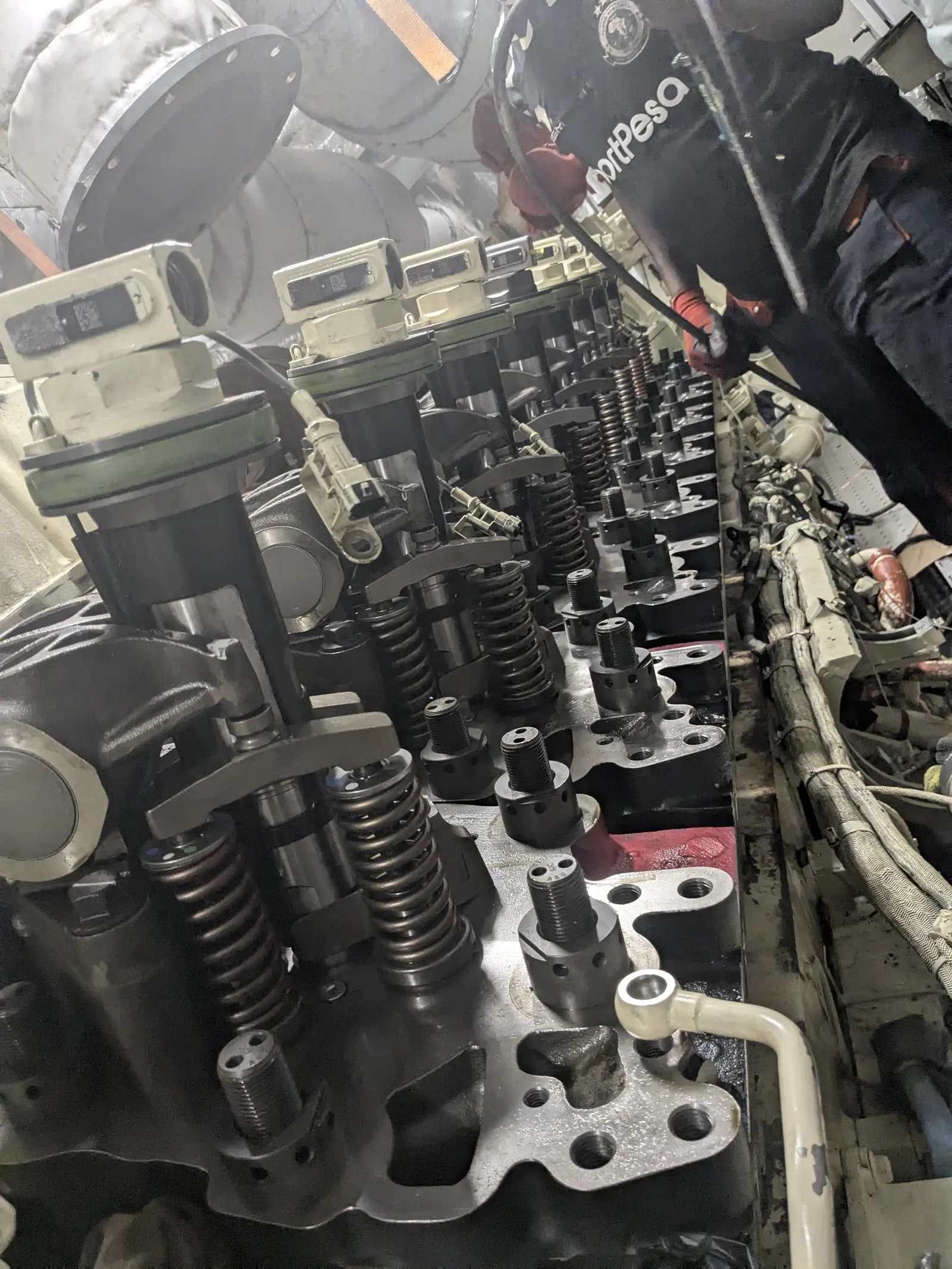
Instruments & evidence
Tested against specification, not opinion.
- ECM scan and fault-code trees, by engine serial number
- ECM and trip data: history and duty cycle
- Injector cut-out and balance: cylinder tests
- Live datalogging: fuel, boost, rail pressure
- Fuel pressure and return flow: system tests
- Compression and blow-by: mechanical condition
- Load testing: genset performance proof
- Coolant and oil analysis: laboratory trend
What you get in writing
Fault codes read and cleared · test readings · root cause · parts required with numbers · labour · next service interval · recommendation for the operator.
What we are called for
Will not start
Battery and starter circuit, ECM power, fuel shut-off, air lock, low-oil guard.
Derate or low power
Boost and charge-air leaks, rail pressure, fuel supply, exhaust restriction, sensor drift.
Overheating
Coolant flow, thermostat, radiator core, water pump, fan drive, belt condition.
Smoke or high oil use
Injectors, timing, rings, turbo seals, breather, air-filter restriction.
Tell us the engine. We’ll tell you the plan.
Send the engine serial number, the application and the symptom. A photo of the data plate is enough.